
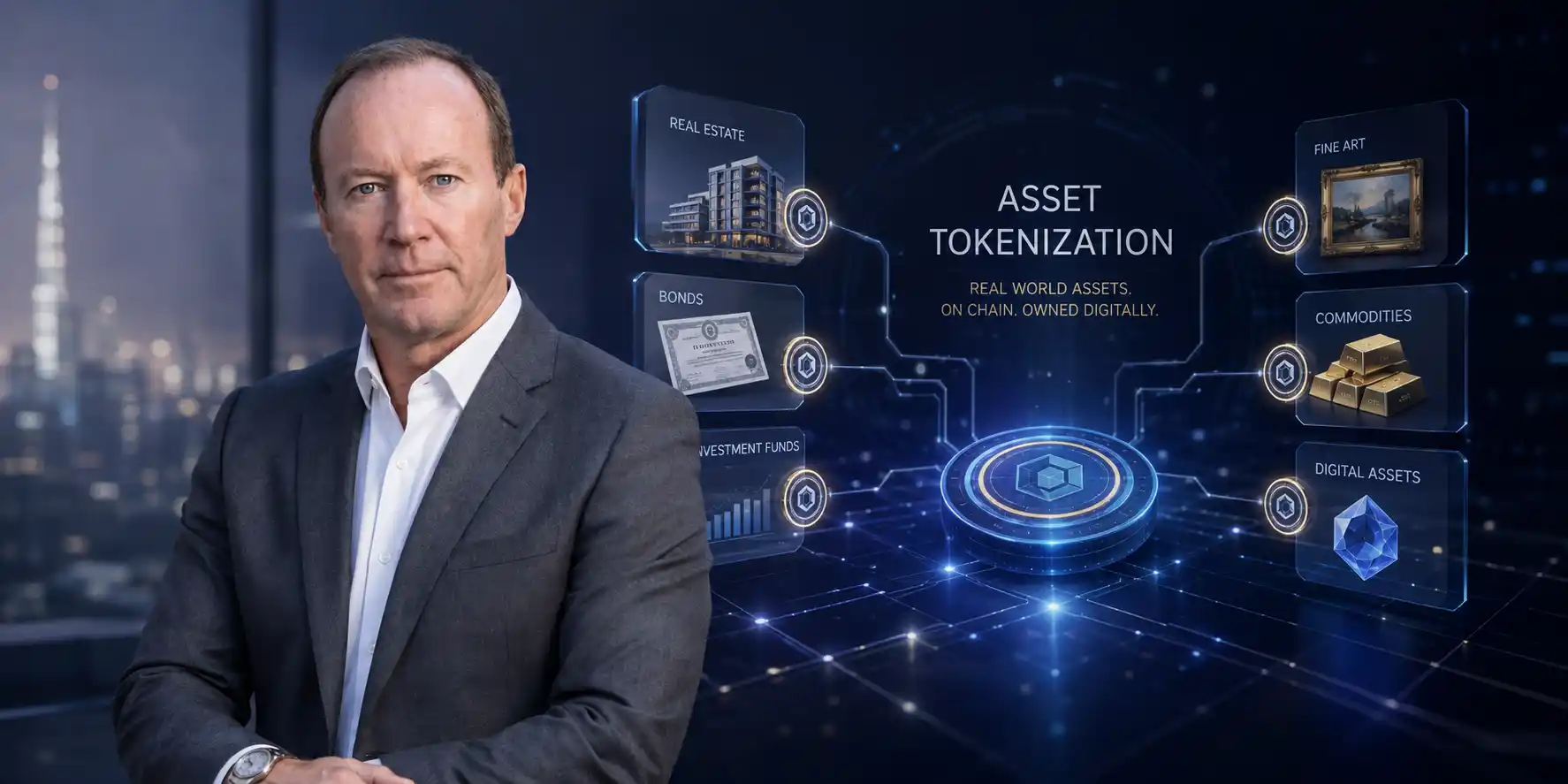
Asset Tokenization: Why Ownership Is Becoming Digital
Asset tokenization may become one of the most important ideas in the future digital economy.
At first, tokenization can sound like another technical blockchain term. But the deeper idea is much bigger. Asset tokenization is about how ownership, value, access, transfer, verification, and financial infrastructure may become more digital over time.
For most people, ownership still feels physical or paper-based. You own a home, a car, a business, a stock, a bond, a collectible, a piece of intellectual property, or a financial account. Behind the scenes, however, many ownership systems are already digital. Records are stored in databases. Transactions move through financial networks. Assets are tracked by institutions, custodians, registries, platforms, and intermediaries.
Tokenization takes that digital shift further.
It asks a powerful question: what happens when ownership rights, financial claims, or real-world assets can be represented as programmable digital tokens?
That question matters because it could affect finance, investing, business, digital ownership, wealth creation, and how people understand value in the future.
What Is Asset Tokenization?
Asset tokenization is the process of representing ownership rights, financial claims, or economic interests in an asset as a digital token on a blockchain or distributed ledger system.
The asset itself may be physical, financial, digital, or contractual. The token is the digital representation of that asset or claim.
Examples can include tokenized real estate interests, tokenized bonds, tokenized funds, tokenized commodities, tokenized invoices, tokenized carbon credits, tokenized art, tokenized intellectual property, or tokenized private market assets.
This does not mean the token magically becomes the asset. That is an important distinction. In many cases, the token represents a legal, financial, or contractual claim connected to an asset held, managed, or verified somewhere else.
That means tokenization is not only a technology question. It is also a legal, financial, governance, custody, compliance, and trust question.
Why Asset Tokenization Matters
Asset tokenization matters because it could change how ownership is recorded, transferred, divided, managed, and accessed.
In traditional finance, many assets move through slow, complex systems involving brokers, custodians, clearinghouses, transfer agents, settlement systems, legal documents, reconciliation processes, and multiple intermediaries.
Tokenized systems may eventually make certain parts of that process more efficient by creating digital records that can be transferred, settled, programmed, and verified more directly.
The Bank for International Settlements has described tokenisation as part of a possible next-generation monetary and financial system, including a framework involving tokenised central bank reserves, tokenised commercial bank money, and tokenised government bonds. BIS
That is important because it shows tokenization is not only being discussed by crypto startups. It is being studied by major financial institutions, central banks, regulators, and asset managers.
Tokenization Is Bigger Than Crypto Speculation
One of the biggest mistakes people make is thinking tokenization is only about crypto speculation.
Crypto markets are part of the story, but tokenization is a broader financial infrastructure idea. It is less about chasing price movements and more about representing assets, ownership rights, and financial claims in digital form.
This distinction matters.
A speculative token with no real underlying value is very different from a token that represents a regulated money market fund share, a government bond, a real estate claim, or a tokenized deposit inside a trusted financial system.
The future of tokenization will depend on legal clarity, asset quality, custody, compliance, redemption rights, liquidity, market structure, and trust.
That is why asset tokenization needs to be understood maturely. It is not a shortcut to wealth. It is a new way to think about ownership infrastructure.
What Kinds of Assets Can Be Tokenized?
In theory, many types of assets can be tokenized. In practice, some assets are much better suited to tokenization than others.
Common asset categories include:
- Financial assets: Bonds, funds, money market products, private credit, equities, and structured products.
- Real-world assets: Real estate, commodities, invoices, carbon credits, and physical collectibles.
- Digital assets: Digital products, digital rights, memberships, credentials, and access rights.
- Intellectual property: Royalties, licensing rights, creative works, patents, music rights, and media assets.
- Alternative assets: Art, luxury goods, private market interests, and other hard-to-access assets.
The important question is not simply whether an asset can be tokenized. The better question is whether tokenization actually improves the system around that asset.
Does it improve access? Does it reduce friction? Does it improve transparency? Does it make settlement faster? Does it create better recordkeeping? Does it lower cost? Does it improve liquidity? Does it create new risks?
Tokenization should solve a real problem. Otherwise, it is just a digital wrapper.
The Promise: Better Access and More Efficient Markets
The promise of asset tokenization is that it may create more efficient, programmable, and accessible markets.
Tokenization could make it easier to divide ownership into smaller units. It could allow certain assets to trade more efficiently. It could improve settlement speed. It could reduce reconciliation issues. It could make ownership records more transparent. It could support programmable rules around transfers, compliance, payments, or distributions.
McKinsey has estimated that tokenized market capitalization across asset classes could reach about $2 trillion by 2030, excluding cryptocurrencies and stablecoins. McKinsey
That projection does not mean tokenization will transform everything overnight. It does suggest that tokenization has moved beyond theory and into serious financial experimentation and development.
The Reality: Tokenization Does Not Automatically Create Liquidity
One of the most common claims about tokenization is that it can increase liquidity.
That may be true in some cases, but it is not automatic.
Just because an asset is represented as a token does not mean there will be buyers, sellers, market depth, trust, regulation, or active trading. Liquidity depends on demand, market structure, investor access, legal rights, custody, pricing, transparency, and confidence.
Recent research on tokenized real-world assets has emphasized that tokenization and liquidity should be treated as distinct outcomes. In other words, putting an asset on-chain does not automatically make it liquid. Research on tokenized RWA liquidity
This is an important point because it prevents people from falling into hype.
Tokenization may improve certain market functions, but it does not remove the need for sound asset design, investor protection, market demand, and trustworthy infrastructure.
Tokenization Depends on Trust
Trust is at the center of asset tokenization.
People need to know what the token represents, who issued it, what asset backs it, who holds the asset, what legal rights the token holder has, how redemption works, what happens in a dispute, what regulations apply, and how the system is audited.
This is especially important with real-world assets because the asset usually exists outside the blockchain. A token may move on-chain, but the legal claim, custody arrangement, asset verification, and enforcement mechanisms may remain off-chain.
Research on real-world asset tokenization has described many current systems as hybrid architectures, where blockchain tokens support representation and transfer while core legal guarantees remain anchored in off-chain legal wrappers, custodial arrangements, compliance processes, and verification mechanisms. RWA tokenization taxonomy research
That is why tokenization is not just about code. It is about the relationship between code, law, finance, governance, and trust.
Why Asset Tokenization Connects to Digital Ownership
Asset tokenization connects directly to digital ownership because it changes how people think about what ownership can look like in a digital system.
Digital ownership is not only about owning crypto. It is about owning assets, claims, rights, relationships, content, intellectual property, access, credentials, and value in digital environments.
Tokenization may eventually make ownership more programmable, portable, divisible, and easier to verify. It may also create new ways to represent ownership in products, communities, finance, media, real estate, and business assets.
That said, ownership must be real. A token is only as meaningful as the rights, rules, infrastructure, and trust behind it.
This is why digital ownership literacy matters. People need to understand the difference between owning a token, owning a claim, owning access, owning a share, owning a right, and owning the underlying asset itself.
Why Asset Tokenization Connects to Future Finance
Asset tokenization is also part of the future finance conversation.
Future finance is about how money, payments, assets, banking, investing, settlement, identity, and ownership evolve through digital technology.
Tokenization may affect the future of bonds, funds, deposits, settlement systems, collateral, private markets, alternative assets, and financial infrastructure. It may also connect with digital wallets, stablecoins, central bank money, tokenized deposits, and blockchain-based settlement platforms.
The BIS has argued that a tokenised unified ledger could support a next-generation monetary and financial system while maintaining trust in central bank money. BIS Annual Economic Report 2025
That is why tokenization should be studied as financial infrastructure, not only as an investment trend.
What Could Asset Tokenization Mean for Everyday Investors?
For everyday investors, asset tokenization could eventually change access to certain markets. It may make some assets easier to buy, sell, divide, transfer, or include in digital portfolios.
However, everyday investors should be cautious.
Access is not the same as safety. Fractional ownership is not the same as good value. A token is not automatically liquid. A blockchain record does not eliminate market risk. Digital access does not replace due diligence.
People need to understand the asset, the issuer, the legal rights, the platform, the custody model, the fees, the liquidity, the risks, and the regulatory environment before participating.
This article is not financial advice. It is a future literacy conversation.
What Could Asset Tokenization Mean for Creators and Entrepreneurs?
Asset tokenization may also become relevant for creators, entrepreneurs, and intellectual property owners.
In the future, tokenized systems could potentially support new models for licensing, royalties, memberships, access, community ownership, creative rights, digital products, and revenue participation.
For example, a creator might eventually use tokenized access rights for a community, tokenized licensing for media assets, or programmable royalty systems for digital products. A business might use tokenized ownership structures, tokenized customer benefits, or tokenized credentials.
Not all of these models will work. Some will be overhyped. Some may be limited by law, regulation, consumer adoption, or poor user experience. But the direction is worth understanding because ownership models are changing.
The people who understand these ideas early will be better prepared to evaluate what is useful and what is noise.
The Risks of Asset Tokenization
Asset tokenization creates opportunity, but it also creates risk.
Key risks include:
- Legal risk: The token holder may not fully understand the actual rights attached to the token.
- Custody risk: The underlying asset or the token itself may be poorly protected.
- Liquidity risk: There may not be enough buyers or sellers when someone wants to exit.
- Platform risk: The platform issuing or trading the token may fail, change rules, or lack oversight.
- Smart contract risk: Code errors or exploits can create financial loss.
- Regulatory risk: Rules may change or differ across jurisdictions.
- Valuation risk: The token price may not reflect the real value of the underlying asset.
- Fraud risk: Bad actors may use tokenization language to make weak or misleading projects look legitimate.
These risks do not mean tokenization should be ignored. They mean people need education before participation.
The Future Will Be Hybrid
The future of asset tokenization will likely be hybrid.
That means traditional institutions, blockchain infrastructure, legal systems, custodians, regulated markets, digital wallets, and programmable platforms may all interact. The old financial system will not disappear overnight. The new system will not replace every existing structure at once.
Instead, tokenization may first improve specific parts of the system where the benefits are clear: settlement, collateral, fund administration, private markets, cross-border payments, compliance automation, or asset servicing.
That is why the most realistic view is not hype or dismissal. It is informed observation.
Tokenization is not everything. But it may become an important layer in how ownership and finance become more digital.
Why People Should Learn About Asset Tokenization Now
People should learn about asset tokenization now because it sits at the intersection of several important future trends.
It connects blockchain to finance. It connects digital ownership to real-world assets. It connects future finance to wealth creation. It connects legal rights to programmable systems. It connects institutions to digital infrastructure.
That makes it one of the clearest examples of the future digital economy in action.
You do not need to become a blockchain developer or financial engineer to understand the basic idea. But you do need to understand the direction: ownership is becoming more digital, and the systems that manage ownership are beginning to evolve.
Questions to Ask Before Trusting a Tokenized Asset
Before trusting any tokenized asset, people should ask practical questions:
- What asset does the token represent?
- Who issued the token?
- What legal rights does the token holder actually have?
- Who holds or verifies the underlying asset?
- How does redemption work?
- Is there real liquidity?
- What regulations apply?
- What fees are involved?
- What happens if the platform fails?
- How is the asset valued?
- What risks are not obvious?
These questions help separate useful innovation from marketing language.
Final Thought
Asset tokenization matters because ownership is becoming digital.
It may change how assets are represented, transferred, divided, settled, verified, and accessed. It may become part of the next generation of financial infrastructure. It may create new opportunities for investors, businesses, creators, institutions, and digital ownership models.
But tokenization is not magic. It does not automatically create value, liquidity, safety, or trust. The token is only as strong as the asset, legal rights, governance, custody, market structure, and trust behind it.
The future of ownership will not only be about what people own. It will also be about how ownership is represented, verified, transferred, and protected in digital systems.
That is why asset tokenization is one of the most important future finance ideas to understand now.
Explore More
Read more on the Curtis Randall B-Log, explore future-focused education on Sights.com, or connect through the Contact page.

About the Author
Curtis Randall is an award-winning creative executive and future systems thinker helping people and businesses understand and adapt to the future of work, creativity, technology, digital ownership, and wealth creation. Through CurtisRandall.com and Sights.com, Curtis explores the systems shaping how people work, create, own, and build value in a rapidly changing world.
Connect with Curtis: LinkedIn · YouTube · Instagram · X · TikTok · Facebook · Threads