
What Is the Future Digital Economy and Why Should You Care?
The future digital economy is no longer a distant idea. It is already reshaping how people work, create, earn, own, invest, communicate, and build value.
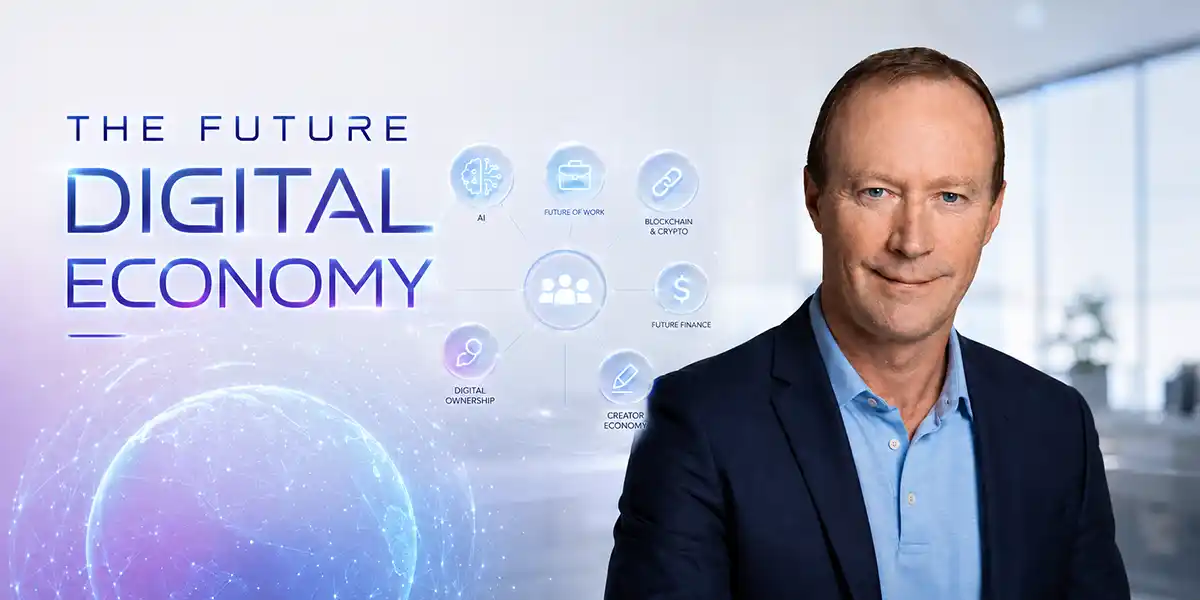
Artificial intelligence is changing productivity. Blockchain is changing how people think about ownership and verification. Digital platforms are changing how businesses reach customers. Creator tools are changing how individuals build influence. Online education, digital products, automation, tokenisation, and future finance are creating new pathways for income and opportunity.
All of these changes are connected.
That connection is what I call the future digital economy.
This is not just a technology story. It is a work story, a wealth story, an ownership story, a business story, and a human adaptation story. The people and businesses that understand this shift earlier will be better prepared to make smarter decisions, build stronger systems, and create more options in a changing world.
The Future Digital Economy Is the New System of Value
The simplest way to understand the future digital economy is this: it is the next stage of how value is created, exchanged, owned, and scaled through digital systems.
In the industrial economy, value was often built through factories, physical products, labour, land, distribution networks, and capital-intensive infrastructure. In the early digital economy, value moved toward software, websites, e-commerce, search engines, social platforms, mobile apps, and cloud computing.
The future digital economy builds on all of that, but adds a new layer of intelligent, automated, decentralised, and ownership-based systems.
AI helps people and businesses work faster. Blockchain creates new ways to verify ownership and transfer value. Digital assets introduce new forms of property. Creator platforms allow individuals to build media businesses. Future finance changes how money, payments, tokenisation, and investment products may evolve. Emerging technologies continue to reshape what is possible.
That is why this subject matters. The future digital economy is not one trend. It is the convergence of many trends into a new operating environment.
Why the Future Digital Economy Matters Now
Many people wait until a major shift becomes obvious before they start paying attention. By then, the early advantages are often gone.
The future digital economy matters now because the rules of work, business, ownership, and wealth creation are already changing. People are using AI to build businesses faster. Creators are turning knowledge into digital products. Companies are using automation to reduce cost and increase speed. Financial institutions are exploring tokenisation. Individuals are learning that owning a website, email list, personal brand, content library, or digital product can provide more control than depending only on rented platforms.
The OECD’s Digital Economy Outlook examines the opportunities and challenges emerging across the digital economy, including the foundations that enable digital transformation, digital innovation, and trust in the digital age.
That last point is important: trust.
The future digital economy is not only about speed and technology. It is also about trust, identity, ownership, credibility, security, and long-term value. People will need to understand not only what tools can do, but what systems they are participating in.
AI Is Accelerating the Shift
Artificial intelligence is one of the biggest accelerators of the future digital economy.
AI can help people research, write, design, code, plan, analyse, automate, summarise, and create at a speed that was not possible before. For businesses, this changes workflows, customer service, marketing, product development, training, operations, and decision-making. For individuals, it creates new leverage.
The World Economic Forum’s Future of Jobs Report 2025 highlights how technology, AI, automation, and changing skills are reshaping work and workforce strategy. That matters because the future digital economy will reward people who keep learning and adapting.
But AI should not be treated as magic. AI is a tool, a system, and a form of leverage. It can make good thinking faster, but it can also make poor thinking louder. The advantage will go to people who use AI with judgment, strategy, ethics, and clear direction.
The real opportunity is not simply using AI to complete tasks. The real opportunity is building AI into repeatable systems that help people create value.
Digital Ownership Is Becoming Essential
One of the most important ideas in the future digital economy is digital ownership.
For years, people built their businesses, audiences, and influence on platforms they did not control. Social media, video platforms, marketplaces, and search engines created massive opportunities, but they also created dependency.
If your audience only exists on a platform you do not own, your reach can change overnight. If your income depends on one algorithm, your business is fragile. If your knowledge is not turned into assets, your expertise may not create the long-term value it could.
Digital ownership means building things you control or have a stronger claim over. That can include your website, email list, brand, content library, intellectual property, digital products, courses, newsletters, community, software workflows, and eventually blockchain-based assets.
This is why I believe digital ownership will become one of the most important subjects for creators, professionals, entrepreneurs, and businesses. It is not just about owning crypto or digital collectibles. It is about owning more of your future.
Blockchain and Tokenisation Are Part of the Bigger Shift
Blockchain and crypto are often discussed through hype, speculation, and price movement. That is only one part of the story, and it is often the least useful place to start.
The bigger idea is that blockchain introduced a new way to think about verification, ownership, transfer, and programmable value. Tokenisation expands that conversation by asking what happens when real-world or financial assets can be represented digitally and transferred through new infrastructure.
The Bank for International Settlements has written about tokenised platforms, unified ledgers, and the next-generation monetary and financial system, including tokenised central bank reserves, commercial bank money, and government bonds as part of future financial infrastructure.
That does not mean every blockchain project is valuable. It does not mean every token is useful. It does not remove risk. It does mean that digital ownership and programmable value are important ideas to understand.
People do not need to chase hype. They do need to understand the direction of change.
Future Finance Is Becoming More Digital
Finance is also becoming more digital, more automated, more global, and more connected to technology.
Payments, digital wallets, stablecoins, tokenisation, online investing platforms, digital banking, AI-driven financial tools, and blockchain infrastructure are changing how people interact with money. Some of these changes will take years to mature. Some will be regulated heavily. Some will fail. Some may become foundational.
This is why financial literacy needs to expand. People still need to understand saving, investing, debt, risk, cash flow, taxes, and long-term planning. But they also need to understand digital assets, platform risk, cybersecurity, custody, scams, online income, and digital ownership.
Future finance is not about pretending every new financial technology is good. It is about understanding how money, value, ownership, and technology are converging.
The Creator Economy Was an Early Signal
The creator economy gave us an early look at how the future digital economy works.
Individuals learned that they could build audiences, publish media, teach online, sell digital products, attract clients, launch communities, and create business opportunities without waiting for traditional gatekeepers.
But the real lesson was not that everyone should become an influencer. The real lesson was that knowledge, trust, media, distribution, and digital systems can become economic assets.
A blog post can become a video. A video can become a short. A short can lead to an email subscriber. An email subscriber can become a customer. A customer question can become a digital product. A digital product can become a course. A course can become a community. A community can become a business.
That is the future digital economy in action.
Future Work Requires Future Literacy
The future digital economy creates a new kind of literacy requirement.
It is not enough to understand one tool, one job, one platform, or one trend. People need future literacy. They need to understand the larger forces shaping work, technology, ownership, finance, media, and opportunity.
Future literacy includes understanding:
- How AI changes productivity and decision-making
- How digital platforms change opportunity and dependency
- How digital ownership creates resilience
- How blockchain changes verification and value transfer
- How future finance changes money and assets
- How content creates trust and authority
- How digital products turn knowledge into income
- How systems thinking creates leverage
This does not mean people need to become experts in everything. It means they need enough understanding to make better decisions.
Why Businesses Should Care
Businesses should care about the future digital economy because customer behaviour, workforce expectations, marketing systems, financial tools, and competitive advantage are all changing.
Companies that understand AI can improve operations. Companies that understand content can build trust. Companies that understand digital ownership can reduce platform dependency. Companies that understand emerging technology can identify opportunities earlier. Companies that understand future finance can better prepare for new payment, asset, and value systems.
The risk is not only being disrupted by technology. The risk is failing to understand how customers, workers, markets, and value creation are changing around technology.
Why Individuals Should Care
Individuals should care because the future digital economy creates both opportunity and responsibility.
It gives people more tools to learn, create, publish, build, invest, and earn. But it also requires better judgment. More tools also mean more noise. More opportunity also means more risk. More access also means more responsibility.
The people who do well will not be the people who chase every trend. They will be the people who learn how the systems work, build practical skills, create assets, protect themselves from hype, and make better long-term decisions.
This is where wealth creation becomes part of the future digital economy conversation. Wealth creation is not only about money. It is about building skills, assets, ownership, resilience, freedom, and options.
What You Should Start Building Now
The future digital economy can feel overwhelming, but the practical starting points are simple.
Start by learning how AI can improve the work you already do. Build a personal or business website that you control. Capture your knowledge in articles, videos, notes, or resources. Build an email list or direct audience relationship. Learn the basics of blockchain and digital ownership without falling into hype. Improve financial literacy. Understand risk. Turn skills into assets. Think in systems.
You do not need to do everything at once. But you do need to begin.
The future does not wait for people to feel ready. It rewards the people who start learning before they are forced to.
Final Thought
The future digital economy is the convergence of work, technology, ownership, finance, media, and wealth creation.
It is not one platform, one app, one coin, one tool, or one trend. It is a new system of value being built through AI, digital ownership, blockchain, future finance, creator platforms, and emerging technology.
The people and businesses that understand this shift will have more options. They will be better prepared to adapt, build, own, and create value in a changing world.
The future digital economy matters because it is changing how people work, how value is created, how ownership is built, and how wealth can be developed over time.
That is why this conversation matters now.
Explore More
Read more future-focused articles on the Curtis Randall B-Log, explore the broader future digital economy on Sights.com, or reach out through the Contact page.

About the Author
Curtis Randall is an award-winning creative executive and future systems thinker helping people and businesses understand the future of work, technology, digital ownership, and creativity. Through CurtisRandall.com, and Sights.com, Curtis explores the systems shaping how people work, create, own, and build value in a rapidly changing world.
Connect with Curtis: LinkedIn · YouTube · Instagram · X · TikTok · Facebook · Threads