
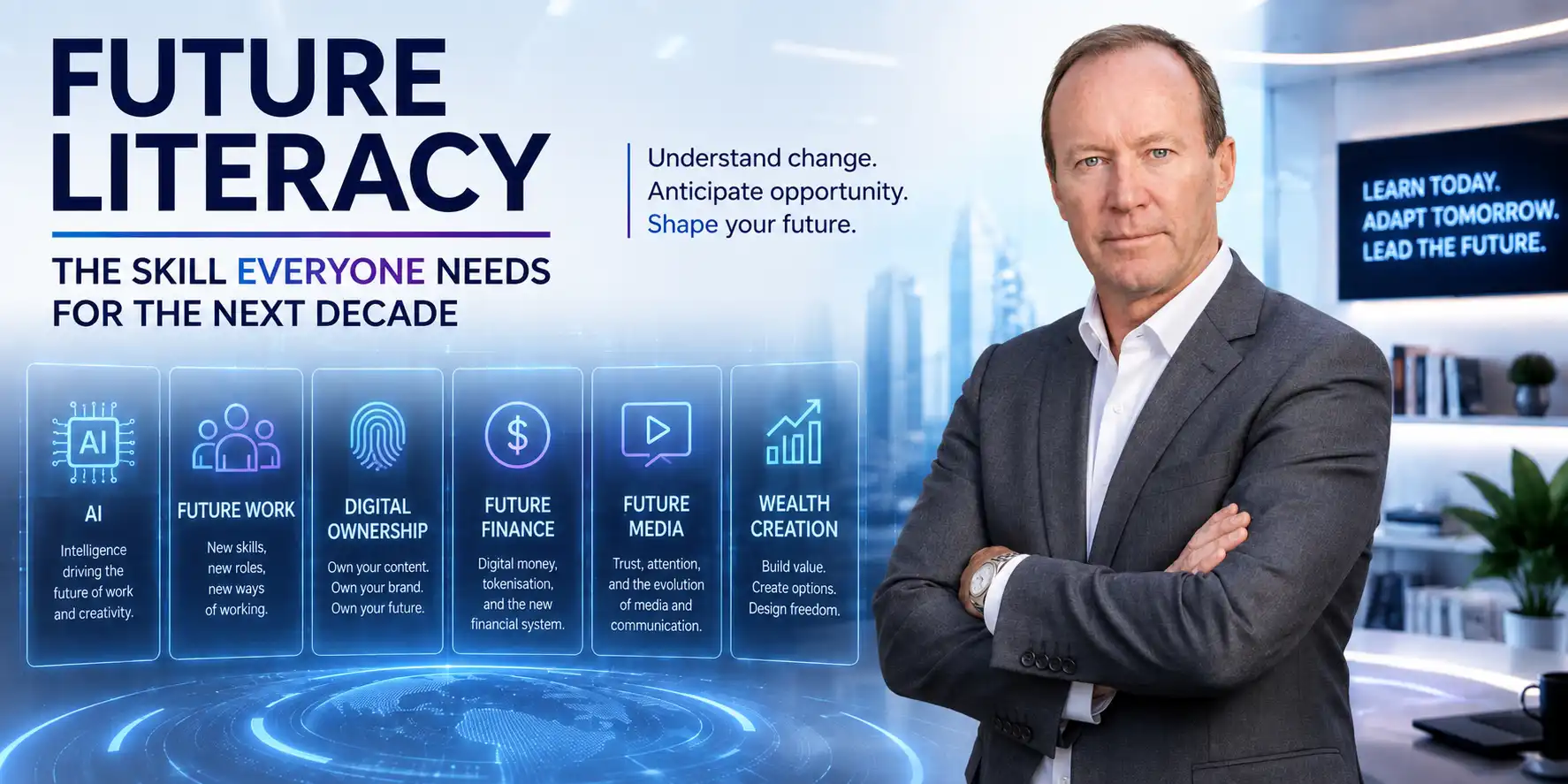
Future Literacy: The Skill Everyone Needs for the Next Decade
Future literacy may become one of the most important skills of the next decade.
That does not mean people need to predict the future perfectly. No one can do that. The future is not a fixed destination waiting to be discovered. It is shaped by technology, people, markets, culture, policy, behavior, risk, innovation, and choices that are still being made.
But people do need to become better at understanding the forces shaping what comes next.
Artificial intelligence is changing work. Digital ownership is changing how people think about assets. Future finance is changing how money and value move. Media is becoming more fragmented. Creator platforms are changing how people build audiences and businesses. Automation is changing productivity. Blockchain is changing the ownership conversation. Wealth creation is becoming more connected to skills, systems, technology, and digital assets.
All of this requires a new kind of literacy.
People need future literacy.
What Is Future Literacy?
Future literacy is the ability to understand, think about, and prepare for possible futures with more clarity and confidence.
It is not fortune-telling. It is not guessing. It is not blindly chasing trends. It is the ability to look at change, ask better questions, recognize patterns, understand risks, and make better decisions in the present.
UNESCO describes futures literacy as a capability that helps people better understand the role the future plays in what they see and do. That is a powerful idea because it reminds us that the way we imagine the future affects how we act today.
If someone believes the future is completely out of their control, they may do nothing. If they believe every new trend is guaranteed to succeed, they may take reckless action. But if they become more future literate, they can develop a better relationship with uncertainty.
Future literacy helps people move from fear to understanding, from reaction to preparation, and from confusion to better decision-making.
Why Future Literacy Matters Now
The world is not simply changing in one area. It is changing across many connected systems at the same time.
AI is changing how work gets done. Digital platforms are changing how people communicate and earn attention. Blockchain is changing how ownership can be verified and transferred. Future finance is changing payments, assets, wallets, tokenisation, and digital money. Creator platforms are changing media and business development. Online education is changing how people learn. Automation is changing productivity and business operations.
These changes are not separate. They overlap.
That is why future literacy matters. People need to understand the connections between these forces, not just the individual tools or headlines.
A person who only learns one tool may fall behind when the tool changes. A person who understands the larger system can adapt more easily. A person who understands AI, work, ownership, finance, media, and digital assets together has a much stronger foundation for the future digital economy.
This is not about knowing everything. It is about knowing enough to make better choices.
The Future Is Becoming More System-Driven
One of the biggest reasons future literacy matters is that the future is becoming more system-driven.
Work is no longer only about job titles. It is about workflows, platforms, automation, skills, data, relationships, tools, and ownership. Wealth creation is no longer only about income. It is about skills, assets, systems, digital products, financial literacy, and technology. Media is no longer only about publishers and broadcasters. It is about creators, platforms, algorithms, AI content, trust, attention, and owned audiences.
When the world becomes more system-driven, people need to become better systems thinkers.
Future literacy helps people see those systems. It helps them ask what is changing, why it matters, who benefits, what risks are created, and what new opportunities may appear.
That is the difference between chasing trends and understanding direction.
AI Literacy Is Part of Future Literacy
Artificial intelligence is one of the clearest reasons people need future literacy.
AI can help people research, write, design, analyze, code, plan, summarize, automate, and create faster. It can support customer service, business operations, education, marketing, finance, media, product development, and decision-making.
But AI also creates new questions. What work will change? What skills will become more valuable? What risks come from overreliance? How do we judge quality? How do we protect privacy? How do we avoid bias? How do we keep human judgment in the loop?
The OECD’s research on skills in the AI age explains that AI is becoming a transformative general-purpose technology, reshaping economies, societies, work, and digital life. It also emphasizes the importance of lifelong learning and the need for people to develop skills that help them work with AI rather than simply react to it.
That is why AI literacy is not only about learning prompts. It is about understanding how AI changes the systems around work, business, communication, trust, and value creation.
Future literacy helps people ask better AI questions. Not only “What can this tool do?” but “What does this tool change?”
Digital Skills Are No Longer Optional
Digital skills have become part of basic future readiness.
People need to understand how to use digital tools, protect their information, communicate online, evaluate sources, manage digital identity, work with AI, create digital assets, and understand how platforms shape behavior.
The OECD’s Digital Economy Outlook has emphasized the importance of digital skills throughout life so people can use digital technologies and data effectively. That matters because the future digital economy will not wait for people to feel ready.
Digital skills are no longer only for technical workers. They matter for executives, creators, consultants, educators, entrepreneurs, professionals, students, retirees, small business owners, and anyone trying to participate in a changing economy.
Future literacy includes digital literacy, but it goes beyond it. Digital literacy helps people use the tools. Future literacy helps people understand what the tools are changing.
Future Work Requires Better Adaptation
The future of work is one of the most important areas where future literacy matters.
Many people are asking whether AI will take jobs, create jobs, change jobs, or make certain skills less valuable. These are important questions, but they are often too narrow.
The better question is: how will work be reorganized around intelligent tools, automation, platforms, data, and human judgment?
The World Economic Forum’s Future of Jobs Report 2025 highlights how technology, AI, automation, macroeconomic change, and green transition pressures are reshaping jobs and skills. It also points to the growing importance of analytical thinking, resilience, flexibility, leadership, social influence, AI, and big data.
That shows why future literacy matters. People do not only need technical skills. They need adaptability. They need judgment. They need learning habits. They need the ability to connect what is changing to what they should do next.
The future of work will reward people who keep learning before they are forced to.
Digital Ownership Is a Future Literacy Issue
Digital ownership is another major part of future literacy.
For years, people built audiences, content, businesses, and reputations on platforms they did not control. That created opportunity, but it also created dependency.
In the next decade, people will need to understand what they own, what they rent, what they control, and what could disappear if a platform changes the rules.
A website, email list, content library, digital product, intellectual property, online course, community, newsletter, brand system, and digital asset strategy can all become part of digital ownership.
This is why I continue to treat CurtisRandall.com as my personal authority hub and Sights.com as a broader education platform for the future digital economy.
Future literacy means understanding that visibility is useful, but ownership creates resilience.
Future Finance Requires Future Literacy
Finance is also becoming more digital, more automated, and more connected to technology.
Digital payments, digital wallets, stablecoins, tokenisation, blockchain infrastructure, online investing platforms, AI finance tools, and embedded finance are all becoming part of the new money system.
This creates opportunity, but it also creates risk.
People will need to understand digital financial literacy, platform risk, scams, cybersecurity, custody, identity, volatility, regulation, and the difference between useful innovation and hype.
Future literacy does not mean someone needs to become a financial expert. It means they need enough understanding to ask better questions before making decisions.
In the future digital economy, financial literacy, digital literacy, and technology literacy will become more connected.
Media Literacy Is Becoming Future Literacy
Media is changing just as quickly as work and finance.
People now receive information through social platforms, search engines, podcasts, newsletters, influencers, creators, short videos, AI summaries, traditional media, private communities, and algorithmic feeds.
That creates more access, but also more confusion.
AI-generated content will make this even more complicated. People will need to evaluate sources, recognize manipulation, understand bias, verify information, and identify trusted voices.
Future literacy includes the ability to navigate media systems without being pulled into every panic, hype cycle, or false promise.
This is also why personal authority and trust will matter more. In a noisy world, people look for guides who can explain change clearly and responsibly.
Future Literacy and Wealth Creation
Future literacy is directly connected to wealth creation.
Wealth creation in the next decade will not only come from traditional employment or investing. It will also come from digital skills, owned assets, content systems, digital products, intellectual property, AI workflows, online education, personal brands, creator businesses, and future finance.
People who understand these systems will be better prepared to create value. People who do not understand them may miss opportunities or fall into risks they do not recognize.
Future literacy helps people see how skills become assets, how assets create options, how ownership builds resilience, and how technology can create leverage.
That is why future literacy is not only an academic idea. It is practical. It affects work, money, business, creativity, education, and personal freedom.
The Future Literate Person Asks Better Questions
A future literate person does not pretend to know everything. They ask better questions.
They ask:
- What is changing?
- Why is it changing now?
- What system does this affect?
- Who benefits from this change?
- Who is at risk?
- What skills will become more valuable?
- What should I learn next?
- What should I own rather than rent?
- What opportunities are real?
- What hype should I avoid?
- What decision should I make today because of what may happen tomorrow?
These questions are simple, but they change how people think. They move a person from passive observer to active learner.
That is the real value of future literacy.
How to Build Future Literacy
Future literacy can be developed over time.
Start with these practical habits:
- Study signals, not just headlines. Look for patterns behind the news.
- Learn across categories. AI, finance, work, media, ownership, and technology increasingly overlap.
- Build digital skills. Use tools, but also understand how they change behavior and value.
- Read credible sources. Balance personal commentary with research from trusted institutions.
- Create your own frameworks. Frameworks help organize complex ideas into useful thinking.
- Build something you own. A website, article library, email list, product, or knowledge base can turn learning into an asset.
- Practice scenario thinking. Ask what could happen if a trend accelerates, slows down, fails, or becomes regulated.
- Keep learning continuously. The future will keep changing, so your learning system matters.
The goal is not to become overwhelmed. The goal is to become better prepared.
Future Literacy Is a Leadership Skill
Future literacy is also a leadership skill.
Leaders, founders, creators, executives, educators, consultants, advisors, and professionals will all need to help others navigate change. That requires more than enthusiasm for technology. It requires clarity, responsibility, judgment, communication, and trust.
People will look for guides who can explain what matters without creating panic or hype.
That is one of the reasons I believe authority will matter more in the next decade. The people who can translate complex change into practical understanding will become more valuable.
Future literacy gives leaders the ability to see change earlier, explain it better, and help others adapt with more confidence.
Why This Matters for CurtisRandall.com
This is one of the central ideas behind my work on CurtisRandall.com.
The future digital economy is not just about technology. It is about how people work, create, own, learn, communicate, build trust, and create value. That requires a broader kind of understanding.
Future literacy connects the major themes I continue to explore here: future work, artificial intelligence, digital ownership, creator economy, future finance, future media, emerging technology, systems thinking, and wealth creation.
These subjects are not separate. They are part of the same shift.
The goal is to help people make sense of that shift and build better systems for what comes next.
Final Thought
Future literacy is the skill everyone needs for the next decade because the future is becoming harder to ignore and more difficult to navigate.
AI will change work. Digital ownership will change assets. Future finance will change money. Media will change trust. Creator platforms will change opportunity. Wealth creation will become more connected to skills, systems, technology, and ownership.
The people who understand these connections will be better prepared to adapt, build, lead, and create value.
Future literacy is not about predicting the future. It is about building the ability to understand change before change forces you to react.
That is why future literacy matters now.
Explore More
Read more on the Curtis Randall B-Log, explore future-focused education on Sights.com, or connect through the Contact page.

About the Author
Curtis Randall is an award-winning creative executive and future systems thinker helping people and businesses understand and adapt to the future of work, creativity, technology, digital ownership, and wealth creation. Through CurtisRandall.com and Sights.com, Curtis explores the systems shaping how people work, create, own, and build value in a rapidly changing world.
Connect with Curtis: LinkedIn · YouTube · Instagram · X · TikTok · Facebook · Threads