
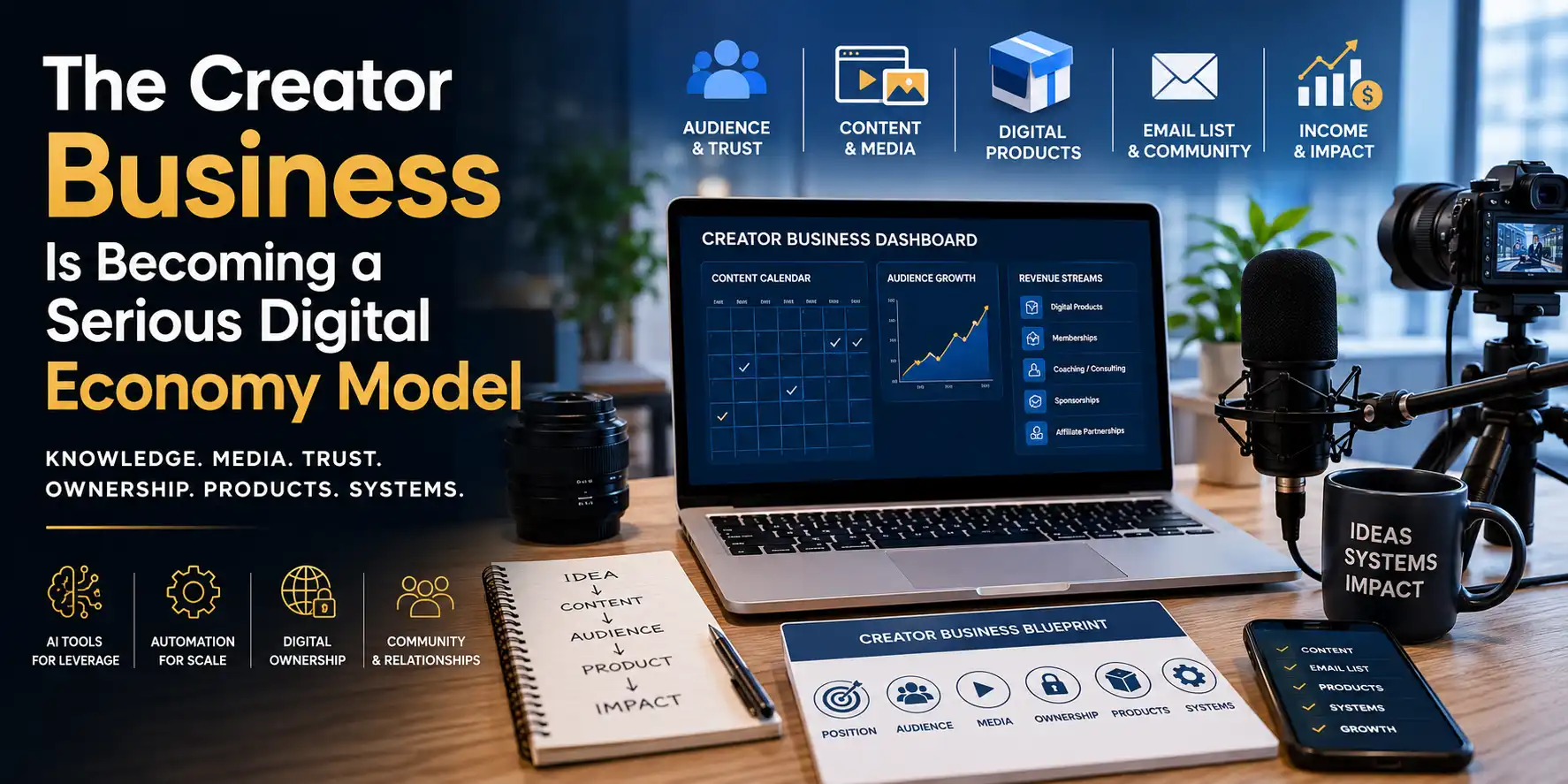
The Creator Business Is Becoming a Serious Digital Economy Model
The creator business is no longer just about posting content online.
It is becoming a serious digital economy model built around knowledge, media, trust, audience, digital ownership, products, services, automation, and long-term value creation.
For years, the word “creator” was often associated with social media posts, YouTube videos, podcasts, influencers, personal brands, and online attention. Those things are still part of the picture, but the creator business model is much bigger than content creation alone.
In the future digital economy, creators can become educators, consultants, publishers, community builders, product owners, media brands, speakers, advisors, and entrepreneurs. They can use AI to create leverage, digital ownership to build assets, automation to scale operations, and media systems to build trust.
This matters because the future of work is changing. People are looking for new ways to create income, build authority, own their platforms, share their knowledge, and turn expertise into value.
The creator business is one of the clearest examples of how the future digital economy is already taking shape.
A Creator Is No Longer Just a Content Creator
The old idea of a creator was simple: someone who makes content and posts it online.
But that definition is too small now.
A creator can be anyone who turns ideas, knowledge, skills, stories, expertise, or perspective into digital value. That could be a writer, educator, consultant, designer, strategist, coach, speaker, podcaster, filmmaker, entrepreneur, business owner, or industry expert.
The creator business model is not only about being seen. It is about building a system around what you know, what you create, who you help, and what value you can deliver.
This is an important shift. Content may create attention, but business requires structure. A creator business needs a clear audience, a useful point of view, a content system, an owned platform, an offer, a relationship strategy, and a way to turn trust into value.
The Creator Business Starts With Trust
Trust is the foundation of any creator business.
People do not follow, subscribe, buy, hire, recommend, or partner with someone only because they posted content. They take action because they believe that person understands something, can explain it clearly, and may be able to help them move forward.
This is why creators need more than visibility. They need credibility.
Trust is built through consistency, clarity, usefulness, experience, honesty, and point of view. It comes from showing up with ideas that help people understand their world, solve problems, make decisions, or see new possibilities.
In the creator business model, trust becomes an asset. It can lead to consulting, speaking, products, memberships, partnerships, sponsorships, communities, and long-term customer relationships.
Attention may start the relationship. Trust is what gives the relationship value.
Content Becomes the Front Door
Content is still important, but its role changes inside a creator business.
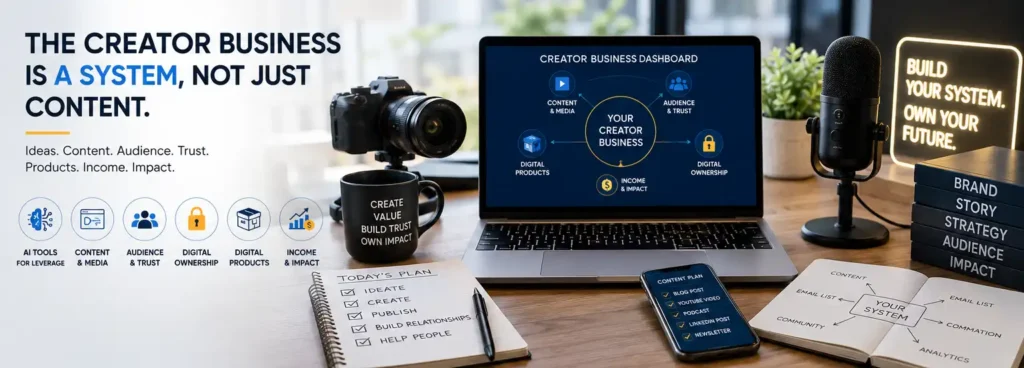
Content is not just something to post. It becomes the front door to a larger system.
An article, video, podcast, newsletter, short clip, or social post can introduce someone to your ideas. It can help them understand your perspective. It can show your expertise. It can build familiarity over time.
But content should not live in isolation. It should connect to a larger journey.
- A social post can lead to an article.
- An article can lead to an email list.
- An email list can lead to a guide or digital product.
- A digital product can lead to a workshop or consulting offer.
- A podcast can lead to speaking opportunities.
- A content library can become the foundation for a book, course, or advisory system.
This is where many creators miss the bigger opportunity. They create content, but they do not build the system around the content.
A creator business turns content into a pathway.
AI Gives Creators More Leverage
AI is changing creator business because it gives individuals and small teams more leverage.
AI can help with research, outlines, writing drafts, image direction, video scripts, podcast summaries, newsletters, social captions, product ideas, customer research, editing, repurposing, and workflow automation.
This does not mean AI replaces the creator. It means AI can support the creator’s system.
The real value still comes from human judgment, experience, taste, story, credibility, and point of view. AI can help produce options, but the creator decides what matters, what is useful, what is true to the brand, and what creates value for the audience.
AI makes it easier to turn one idea into many useful formats. A creator can take one strong concept and turn it into a blog article, LinkedIn post, YouTube outline, podcast segment, email newsletter, carousel, short-form video, and product section.
That is why AI belongs inside the creator business model. It helps creators build systems, not just content.
Digital Ownership Makes Creator Business More Durable
A creator business becomes stronger when it is built on digital ownership.
Many creators depend heavily on platforms they do not control. They build audiences on social media, publish inside algorithms, and depend on platforms that can change rules, reduce reach, suspend accounts, or shift monetization models.
Those platforms can be valuable, but they should not be the whole business.
Creators need owned assets:
- A website.
- An email list.
- A content library.
- A digital product library.
- A podcast or video archive.
- A customer database.
- A community.
- A brand platform.
- Intellectual property.
- Digital assets that can grow in value over time.
Social platforms are useful for discovery. Owned systems are useful for durability.
In the future digital economy, creators who build owned systems will have more control over their audience, products, relationships, and long-term value.
Digital Products Turn Knowledge Into Assets
Digital products are one of the most important parts of creator business.
A creator can turn knowledge into ebooks, courses, templates, guides, checklists, workshops, memberships, toolkits, resource libraries, paid newsletters, consulting frameworks, and advisory systems.
This matters because digital products allow expertise to become packaged value.
Instead of only trading time for money, creators can build assets that can be sold, updated, licensed, bundled, or used as part of a larger service model.
A digital product does not need to be complicated at the beginning. A simple guide, framework, or workshop can become a starting point. Over time, the creator can expand that into a product ladder.
- Free content builds awareness.
- A lead magnet builds an email list.
- A low-cost product creates a first customer.
- A course or workshop deepens the relationship.
- A consulting or advisory offer creates high-value opportunity.
- A membership or community creates recurring value.
This is how creator business becomes more than content. It becomes a value system.
Media Systems Build Authority
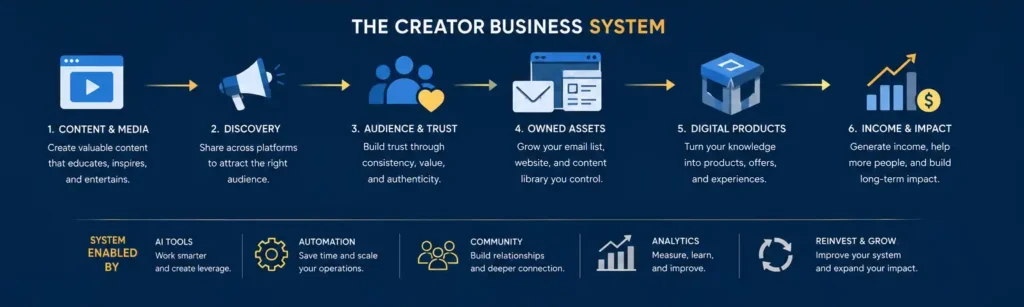
A creator business needs a media system because authority is built over time.
Authority does not come from one viral post. It comes from consistently explaining useful ideas, showing experience, helping people understand problems, and offering a clear point of view.
A strong media system may include a blog, podcast, YouTube channel, newsletter, LinkedIn presence, short-form clips, social posts, downloadable resources, and public talks.
The goal is not to be everywhere randomly. The goal is to create a repeatable system that helps the right audience understand what you stand for.
This is especially important for experts, consultants, entrepreneurs, and business leaders. Their knowledge may be valuable, but people need a way to discover it, trust it, and understand how it applies to their own goals.
A media system turns expertise into visibility. A creator business turns visibility into value.
Automation Helps the Business Scale
Automation is another reason creator business is becoming more serious.
Creators can now use automation to manage parts of email delivery, customer onboarding, product sales, scheduling, publishing, lead capture, content repurposing, analytics, community management, and follow-up.
This allows a solo creator or small team to operate with more structure.
Automation does not remove the need for human connection. It helps protect time so the creator can focus on higher-value work: thinking, teaching, advising, creating, serving, and building relationships.
A creator business becomes stronger when repeated tasks are systemized. That allows the creator to spend less time reacting and more time building.
The Creator Business Is Part of Future Work
The rise of creator business is connected to the future of work.
As AI and automation change traditional jobs, more people will look for ways to build independent income, package expertise, create digital assets, and develop authority outside one employer or platform.
This does not mean everyone needs to become a full-time creator. But many professionals will need creator skills.
- Communicating ideas clearly.
- Building a personal brand.
- Publishing useful content.
- Growing an audience.
- Creating digital products.
- Teaching what they know.
- Building trust online.
- Using AI and automation to create leverage.
These skills are becoming part of the future digital economy because they help people create options.
Creator business is not only about fame. It is about using digital systems to build value around knowledge, experience, and trust.
Organizations Should Pay Attention Too
The creator business model is not only relevant to individuals. Organizations should pay attention as well.
Businesses can learn from creator systems because creators often understand attention, trust, audience relationships, content repurposing, community, and digital products better than traditional organizations.
Organizations can use creator-style thinking to build stronger media platforms, executive thought leadership, educational content, newsletters, customer communities, product education, and owned audience channels.
In many industries, people do not want only advertising. They want useful insight, education, clarity, and trust. That is where creator business thinking becomes valuable for companies too.
The future organization may need to think more like a media company, educator, community builder, and trusted guide.
A Simple Creator Business Framework
A practical creator business can be understood through six connected layers:
- Position: What do you want to be known for?
- Audience: Who are you helping?
- Media: How will people discover your ideas?
- Ownership: What assets and relationships do you control?
- Products: How will your knowledge become packaged value?
- Systems: How will AI, automation, and workflows help the business grow?
This framework keeps the creator business grounded. It is not about chasing every trend or platform. It is about building a system around value.
Final Thought
The creator business is becoming a serious digital economy model because it connects the major forces shaping the future: AI, digital ownership, media, automation, digital products, audience trust, and future work.
Content is only the beginning. The real opportunity is building a system that turns ideas into trust, trust into relationships, relationships into products and services, and products and services into long-term value.
In the future digital economy, creators are not just posting online. They are building media platforms, owned assets, product systems, communities, and businesses around what they know.
The creator business is not just a content trend. It is a new model for building value in the digital economy.
Want to follow this conversation? Read more on the Curtis Randall B-Log, or connect through the Contact page.