
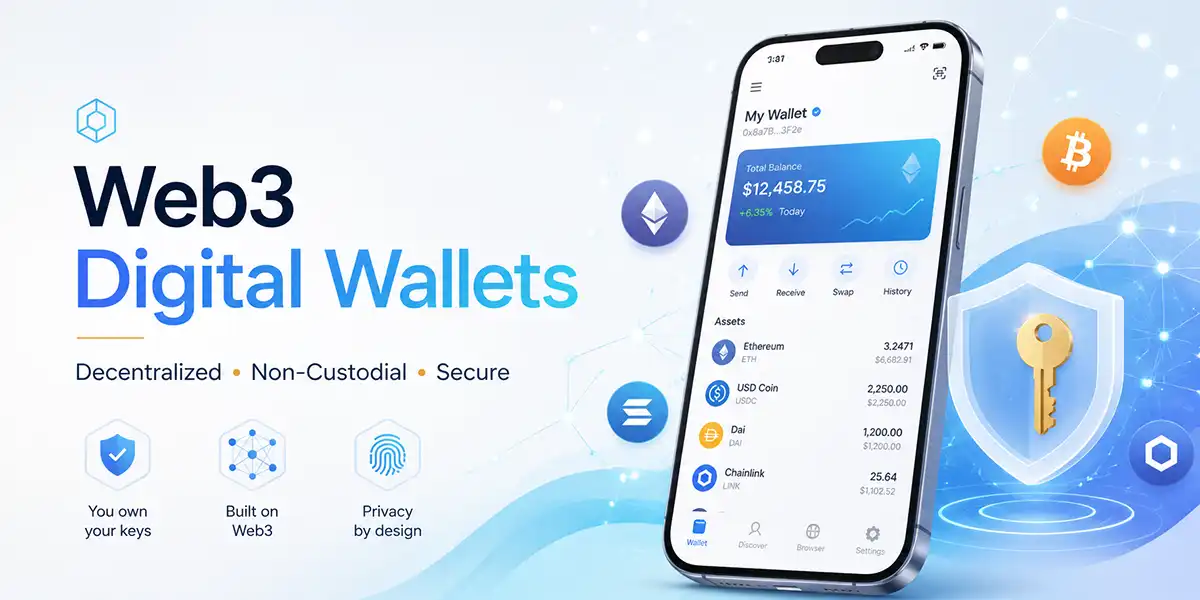
Non-Custodial Decentralized, Web3 Wallets: Why They Matter in the Future Digital Economy
Digital wallets are becoming one of the most important tools in the future digital economy.
For many people, the word “wallet” still means a place to hold money. But in Web3, a digital wallet can become much more than that. It can help people hold digital assets, connect to blockchain applications, manage identity, interact with smart contracts, access communities, prove ownership, and participate in decentralized digital systems.
This is why decentralized, non-custodial Web3 wallets matter. They represent a shift from platform-controlled accounts toward user-controlled digital ownership.
That does not mean everyone should rush into crypto or start using wallets without understanding the risks. A non-custodial wallet gives users more control, but it also gives them more responsibility. If someone controls their own private keys, they also become responsible for protecting them.
This article is not financial advice. It is a simple explanation of what non-custodial decentralized, Web3 wallets are, how they work, why they matter, and what people need to understand before using them.
What Is a Web3 Digital Wallet?
A Web3 digital wallet is a tool that allows people to interact with blockchain networks and decentralized applications.
At a basic level, a wallet can help a user send, receive, store, and manage digital assets such as cryptocurrencies, tokens, NFTs, or other blockchain-based records. But the larger idea is that a Web3 wallet can also act as an access point into decentralized digital systems.
In traditional online services, people usually log in with an email address, password, social media account, or platform account. In Web3, a wallet can act as a blockchain-based identity and access tool. It can connect to decentralized apps, sign transactions, verify ownership, and allow the user to interact with digital systems without always depending on a traditional username and password model.
A simple way to think about it is this:
- A traditional account is usually controlled by a platform.
- A Web3 wallet can be controlled by the user.
- A custodial wallet is managed by a third party.
- A non-custodial wallet puts the keys and responsibility in the user’s hands.
That difference is the foundation of the Web3 ownership conversation.
What Does Non-Custodial Mean?
Non-custodial means that the user controls the wallet’s private keys.
In the crypto and blockchain world, private keys are extremely important because they allow the user to control access to the assets connected to a wallet. If someone else controls the private keys, they control access. If the user controls the private keys, the user has self-custody.
This is different from a custodial wallet, where a company or platform manages the keys on behalf of the user. Many centralized exchanges use custodial wallet systems. They may make onboarding easier, password recovery simpler, and user experience more familiar. But the user is trusting the platform to safeguard access.
With a non-custodial wallet, the user has more direct control. But that control comes with a serious responsibility: the user must protect the private key, recovery phrase, wallet access, and device security.
This is the core tradeoff:
- Custodial wallets can be easier for beginners, but the platform controls the keys.
- Non-custodial wallets give the user more control, but the user carries more responsibility.
Why Decentralized Wallets Matter
Decentralized wallets matter because they are connected to a larger idea: digital ownership.
For many years, people have built their digital lives inside platforms they do not control. They have social accounts, platform profiles, cloud files, payment accounts, subscriptions, digital purchases, content libraries, and audiences spread across systems controlled by companies.
Those systems can be useful, but they are not the same as direct ownership.
A decentralized Web3 wallet introduces a different model. It allows a person to hold and manage certain digital assets directly through a blockchain-based system. This can include crypto assets, NFTs, tokenized memberships, access rights, digital credentials, decentralized identity tools, community passes, and other blockchain-based records.
This does not mean every Web3 project is valuable or safe. It does not mean every token matters. It does not mean every wallet interaction should be trusted. But the wallet itself represents an important shift: it gives people a way to interact with digital systems from a position of ownership rather than only platform dependency.
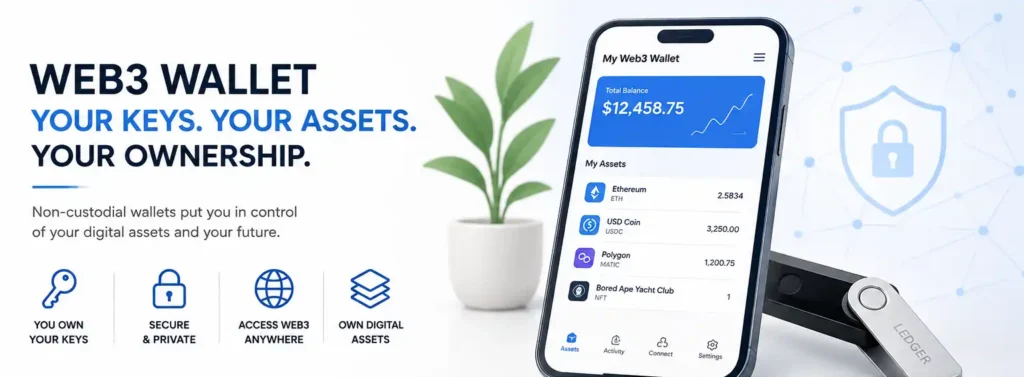
The Wallet Is Not Where the Assets Actually Live
One important idea can be confusing at first: a crypto wallet does not usually “store” assets in the same way a leather wallet stores cash.
In many blockchain systems, the assets and transaction records exist on the blockchain. The wallet manages the keys that allow the user to access and control those assets. The wallet is more like a secure access tool than a physical container.
This is why private keys and recovery phrases matter so much. They are connected to access and control.
If someone loses access to a non-custodial wallet and has no recovery method, they may lose access to the assets connected to that wallet. If someone shares their recovery phrase with a scammer, the scammer may be able to take control of the assets.
That is why wallet education is essential. Digital ownership is powerful only when people understand how to protect it.
Private Keys and Recovery Phrases
A private key is a secret cryptographic key that gives control over a blockchain address. Most users do not interact directly with private keys every day because wallet apps hide much of the complexity. Instead, users are often given a recovery phrase, sometimes called a seed phrase or secret recovery phrase.
A recovery phrase is extremely sensitive. It can be used to restore access to a wallet. That makes it useful if a device is lost, but it also makes it dangerous if it falls into the wrong hands.
The basic safety rule is simple:
Never share your private keys or recovery phrase with anyone.
Legitimate support teams, wallet providers, communities, exchanges, influencers, and project teams should not need your recovery phrase. Anyone asking for it should be treated as a major warning sign.
Good wallet habits include:
- Write the recovery phrase down and store it safely offline.
- Do not store it in plain text on your phone or computer.
- Do not send it through email, chat, or cloud notes.
- Do not type it into websites you do not fully trust.
- Use hardware wallets for higher-value assets where appropriate.
- Use strong device security and avoid suspicious links.
- Start with small amounts while learning.
What Can Web3 Wallets Be Used For?
Web3 wallets can support many different types of activity in the future digital economy.
- Digital money: sending and receiving cryptocurrencies or stablecoins.
- Digital assets: holding tokens, NFTs, collectibles, or tokenized assets.
- Decentralized apps: connecting to blockchain-based applications.
- Smart contracts: signing transactions or interacting with programmable agreements.
- Digital identity: using wallet-based identity or credentials in certain systems.
- Community access: holding membership tokens or access passes.
- Creator business: managing digital products, memberships, collectibles, or audience access.
- Future commerce: participating in new forms of digital payment, ownership, and verification.
This is why wallets are more than a crypto tool. They can become a gateway into digital ownership, decentralized identity, creator economies, tokenized value, and future digital commerce.
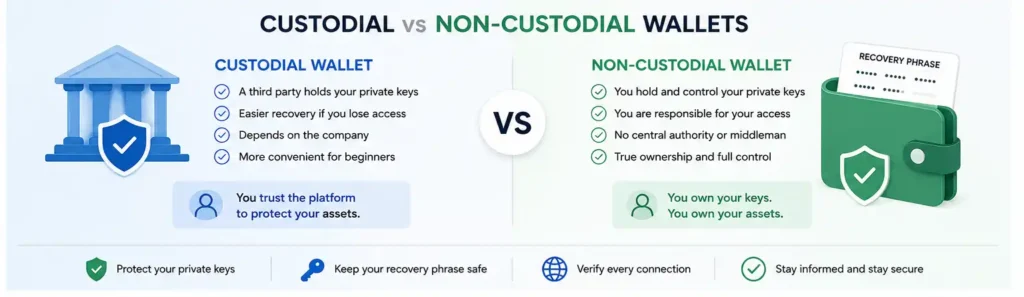
Custodial vs. Non-Custodial Wallets
The difference between custodial and non-custodial wallets is one of the most important things beginners need to understand.
With a custodial wallet, a third party manages the wallet keys. This can feel more familiar because it is closer to traditional online account systems. If a user forgets a password, there may be support options. The experience can be easier, especially for people who are new to crypto.
With a non-custodial wallet, the user controls the keys. This gives the user more direct control over the assets and interactions connected to the wallet. But it also means there may be no customer service team that can recover access if the recovery phrase is lost.
Neither model is perfect for every situation. The right choice depends on experience level, risk tolerance, asset value, use case, and security needs.
A beginner may start with a simpler custodial experience to learn. A more advanced user may prefer non-custodial wallets for control and Web3 access. A business may need institutional custody, multi-signature controls, compliance policies, or professional security systems.
The important thing is to understand the tradeoff: convenience and support on one side, control and responsibility on the other.
Why Wallets Are Part of Digital Identity
Web3 wallets also connect to the future of digital identity.
In traditional systems, identity is often managed by platforms. You create a login, provide information, and the platform controls the account relationship. In Web3, the wallet can become part of how someone proves ownership, signs messages, connects to applications, and carries certain credentials across digital spaces.
This does not mean wallet-based identity will replace every login system. But it introduces an important idea: identity can become more portable, user-controlled, and connected to ownership.
For the future digital economy, this matters because trust will become increasingly important. As AI-generated content, synthetic media, bots, and automated systems grow, people and organizations will need better ways to verify ownership, identity, access, and authenticity.
Web3 wallets may become one part of that trust layer.
Why Creators and Businesses Should Understand Wallets
Creators and businesses do not need to become crypto experts overnight, but they should understand why wallets matter.
For creators, wallets may become connected to digital products, membership access, tokenized communities, NFT-based media, royalty systems, licensing, digital collectibles, and direct audience relationships.
For businesses, wallets may become connected to customer identity, loyalty systems, smart contracts, digital receipts, tokenized assets, secure access, blockchain payments, and verification systems.
The point is not that every business needs a token or every creator needs an NFT collection. The point is that wallets represent a new way to think about access, ownership, transactions, and digital value.
Organizations that understand wallet basics will be better prepared to evaluate future opportunities without being overwhelmed by hype.
The Risks Are Real
Web3 wallets create opportunity, but the risks are real.
Users can lose access by mismanaging recovery phrases. Scammers can trick people into signing malicious transactions. Fake websites can imitate real projects. Phishing links can steal credentials. Some projects can collapse. Tokens can lose value. Regulations can change. People can misunderstand what they are buying or signing.
This is why education must come before speculation.
Before using a wallet, people should understand basic safety:
- Never share a recovery phrase.
- Verify websites before connecting a wallet.
- Be careful with links in emails, DMs, and social posts.
- Do not sign transactions you do not understand.
- Separate high-value assets from experimental wallets.
- Use hardware wallets or multi-signature tools for higher-value use cases.
- Be skeptical of guaranteed returns, urgent claims, or pressure tactics.
- Start small and learn slowly.
A non-custodial wallet can support digital ownership, but only if the user respects the responsibility that comes with control.
A Simple Framework for Understanding Web3 Wallets
A practical way to understand decentralized, non-custodial Web3 wallets is through six ideas:
- Access: A wallet connects users to blockchain networks and decentralized applications.
- Control: A non-custodial wallet lets the user control the private keys.
- Ownership: The wallet can manage access to digital assets and ownership records.
- Identity: The wallet can become part of how users prove identity, access, or credentials.
- Responsibility: The user must protect recovery phrases, devices, and transaction approvals.
- Opportunity: Wallets may support future commerce, creator business, digital assets, and decentralized systems.
This framework keeps the topic practical. A wallet is not only a crypto tool. It is part of a larger ownership and access system for the future digital economy.
Final Thought
Decentralized, non-custodial Web3 digital wallets are important because they represent a new relationship between people and digital systems.
They can give users more control over digital assets, blockchain access, identity, and ownership. But they also require more personal responsibility, better security habits, and a clear understanding of risk.
In the future digital economy, wallets may become more than a place to hold crypto. They may become a gateway to digital ownership, decentralized identity, creator business, smart contracts, tokenized assets, and new forms of value exchange.
The future of digital ownership starts with understanding who controls the keys, who controls the access, and who controls the value.
Want to follow this conversation? Read more on the Curtis Randall B-Log, or connect through the Contact page.