
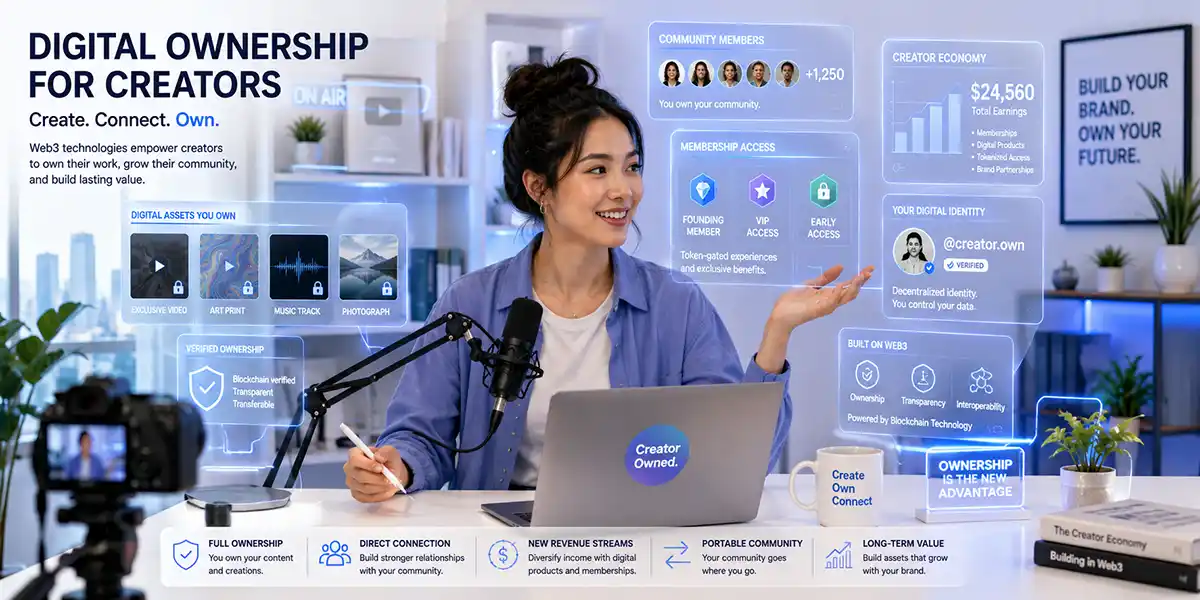
Digital Ownership for Creators: Why Web3 Still Matters
For more than a decade, creators have built businesses on platforms such as YouTube, Instagram, TikTok, Facebook, and other social networks. These platforms have helped millions of creators reach global audiences, build communities, and generate revenue.
However, there is a growing realization within the creator economy that creators often do not truly own the most valuable parts of their businesses. They do not control the algorithms, the distribution systems, or in many cases even direct access to their audiences.
This challenge has helped drive interest in Digital Ownership for Creators, one of the core concepts behind Web3 and the future digital economy.
The Ownership Problem in the Creator Economy
Modern content platforms offer tremendous opportunities for growth and discovery. They provide creators with access to large audiences and powerful distribution systems.
At the same time, creators face several risks:
- Algorithm changes can reduce reach overnight.
- Monetization policies can change unexpectedly.
- Platform rules can affect content visibility.
- Audience relationships remain largely controlled by the platform.
- Account suspensions can disrupt entire businesses.
These challenges highlight an important reality: many creators are building businesses on digital land they do not own.
What Is Digital Ownership?
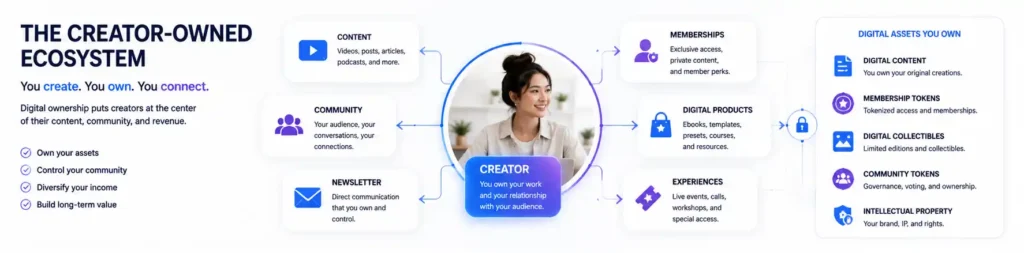
Digital ownership refers to the ability to directly own, control, and manage digital assets, identities, communities, and intellectual property without relying entirely on centralized platforms.
Examples of digital ownership include:
- Digital products
- Digital identities
- Membership communities
- Intellectual property rights
- Digital collectibles
- Tokenized assets
- Creator-owned audience platforms
The goal is to give creators greater control over how they create, distribute, and monetize their work.
Why Web3 Introduced a Different Model
Web3 technologies emerged as a response to many of the ownership limitations found in traditional internet platforms.
Using blockchain technology, Web3 allows ownership records to be stored transparently and independently of any single company or platform.
This enables creators to:
- Own digital assets directly.
- Build portable communities.
- Create tokenized memberships.
- Verify ownership and authenticity.
- Develop new revenue models.
While Web3 has often been associated with cryptocurrency and NFTs, its broader significance lies in the concept of ownership itself.
Digital Ownership Goes Beyond NFTs
Much of the public conversation around Web3 focused on NFTs. While NFTs introduced many people to blockchain-based ownership, they represent only a small part of the larger opportunity.
Today, digital ownership is expanding into areas such as:
- Creator memberships
- Community access systems
- Digital credentials
- Online identities
- Tokenized communities
- Digital rights management
The focus is increasingly shifting from speculation toward utility and long-term value creation.
Why Creators Should Care About Digital Ownership
Creators who understand digital ownership may gain significant advantages in the future digital economy.
Potential benefits include:
- Greater business independence.
- New monetization opportunities.
- Stronger audience relationships.
- More control over digital assets.
- Improved brand resilience.
- Portable communities that can move across platforms.
As creators continue building businesses online, ownership may become as important as audience growth itself.
The Future of Creator Businesses
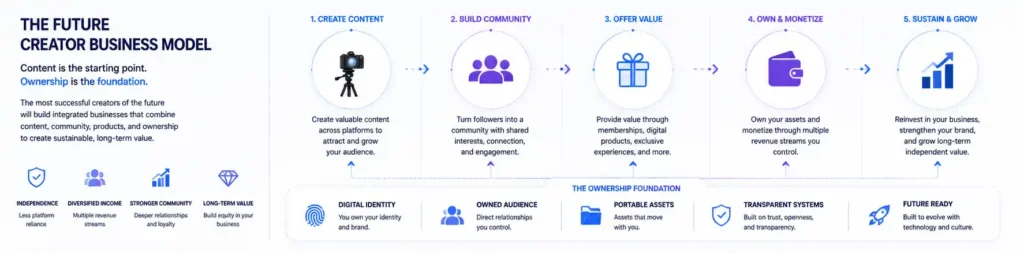
The next generation of creator businesses will likely combine content, community, commerce, and ownership.
Rather than relying exclusively on advertising revenue, creators may increasingly generate income through memberships, digital products, community access, and ownership-based ecosystems.
This approach creates stronger alignment between creators and their audiences while reducing dependence on any single platform.
Conclusion
The future digital economy is increasingly being built around ownership rather than access alone. While platforms will continue to play an important role, creators who understand digital ownership will be better positioned to build resilient and sustainable businesses.
Web3 may have evolved beyond its early hype cycle, but its core idea remains highly relevant: giving individuals greater control over their digital assets, communities, and opportunities in an increasingly digital world.
Continue Exploring the Future Digital Economy
Discover more insights on blockchain, Web3, creator businesses, digital ownership, future media, and the technologies transforming how value is created online.
About the Author
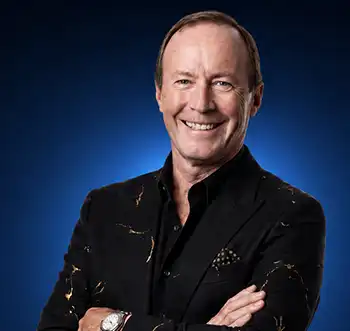
Curtis Randall is an award-winning creative executive and future systems thinker helping people and businesses understand the future of work, technology, digital ownership, and creativity. Through CurtisRandall.com, and Sights.com, Curtis explores the systems shaping how people work, create, own, and build value in a rapidly changing world.
Connect with Curtis: LinkedIn · YouTube · Instagram · X · TikTok · Facebook · Threads